Fence Post Gravel Calculator
Use the fence post gravel calculator to estimate the compacted base material and soil excavated from your holes. Enter the hole dimensions, base thickness and number of posts. Choose whether the post sits on the gravel or passes through it, because those arrangements leave different volumes for the stone.
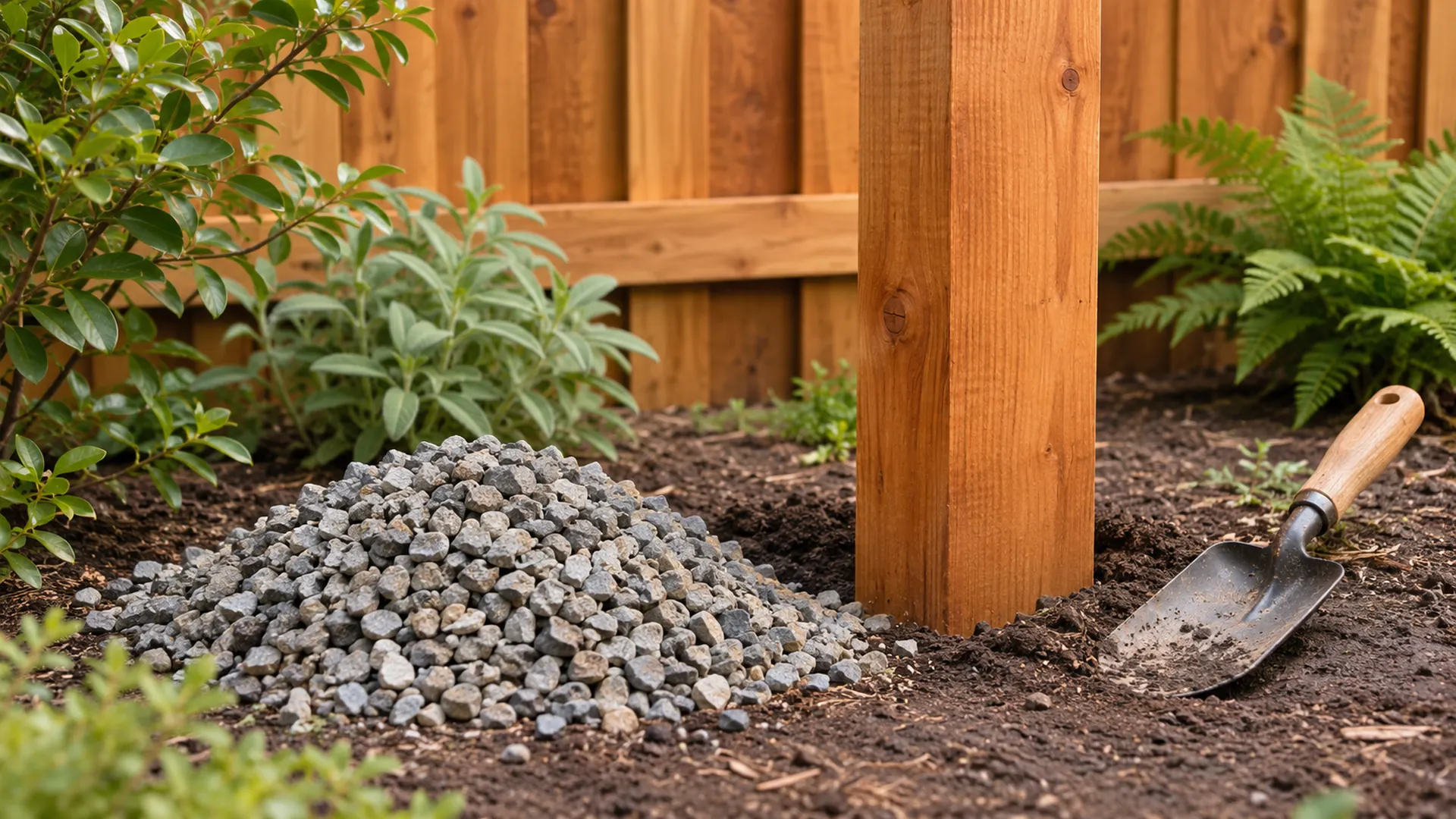
How the fence post gravel calculator works
The gravel estimate uses the cross-sectional area of the hole multiplied by the base thickness. It subtracts the post only when the post actually extends through that layer. Excavation uses the full hole dimensions before any post is inserted.
Measure the base you intend to install
Your installation plan determines the compacted base thickness. The editable 6-inch example comes from a published post-setting method, rather than a requirement for every soil or fence, and zero gravel is allowed when your chosen method doesn’t use a base. Extra stone won’t by itself establish suitable drainage or frost protection, so those details still need to match the site and installation method.
Gravel and excavation volume formulas
For a round hole, area = π × (diameter ÷ 2)². Gravel volume = area × base thickness when the post rests above the base. Subtract the post’s area first when it passes through the gravel.
Excavation volume = full hole area × total depth. Multiply by the number of holes, then convert cubic feet to cubic yards by dividing by 27.
Worked example: ten 12-inch holes
Ten round holes measuring 12 inches across and 30 inches deep produce about 19.635 cubic feet of excavation. A 6-inch gravel base under each post needs about 3.927 cubic feet, or 0.145 cubic yards, before any ordering allowance. This assumes the posts rest on the base.
If the posts pass through the gravel, their displaced volume reduces the stone quantity.

Allow for loose spoil and ordering losses
Excavated soil can occupy more space after digging, but the increase depends on the material and handling. For instance, an optional 20% allowance turns 19.635 cubic feet into 23.562 cubic feet of loose spoil. That isn’t a measured soil property.
Your contractor’s allowance or disposal provider’s capacity guidance gives you a more appropriate basis when you’re arranging removal.
Buy gravel by the supplier’s stated quantity
Your supplier’s stated volume coverage is the useful figure when you’re converting gravel into bags. Weight alone doesn’t give one universal volume, because grading, moisture and bulk density vary; concrete bag yields aren’t a substitute. You can compare bulk delivery with small bags once their quantities and delivery charges are known.
The compacted requirement should stay separate from whatever extra material you decide to order.
Frequently Asked Questions
Does gravel add to buried post length?
No. A base beneath the post adds to hole depth while the buried post length stays the same.
Can I estimate gravel bags from kilograms alone?
Only with an applicable volume or bulk-density value. Bag weight by itself does not establish coverage.
Is loose spoil the same as excavation?
No. Excavation measures undisturbed volume; spoil allowances estimate space afterward.
Sources & References
Method notes · Checked 10 November 2026
Published references
- QUIKRETE: Setting Posts in Concrete. Published guidance for a particular conventional post-setting method: roughly three times post width, height-based depth and a separate gravel base. It is not a universal footing specification.
- NIST: International foot and metric conversion. The international foot is exactly 0.3048 metres. Calculations use consistent units before area and volume conversion.
- 811: Before You Dig. US utility-location guidance. Elsewhere, use the appropriate local service and rules.
Our calculation and planning assumptions
The base and post position are user choices. A loose-spoil percentage is a planning assumption, not measured soil swell. Bag weight alone does not establish gravel volume.
Results are preliminary planning estimates. Confirm the actual fence system, local requirements and installation conditions before construction.