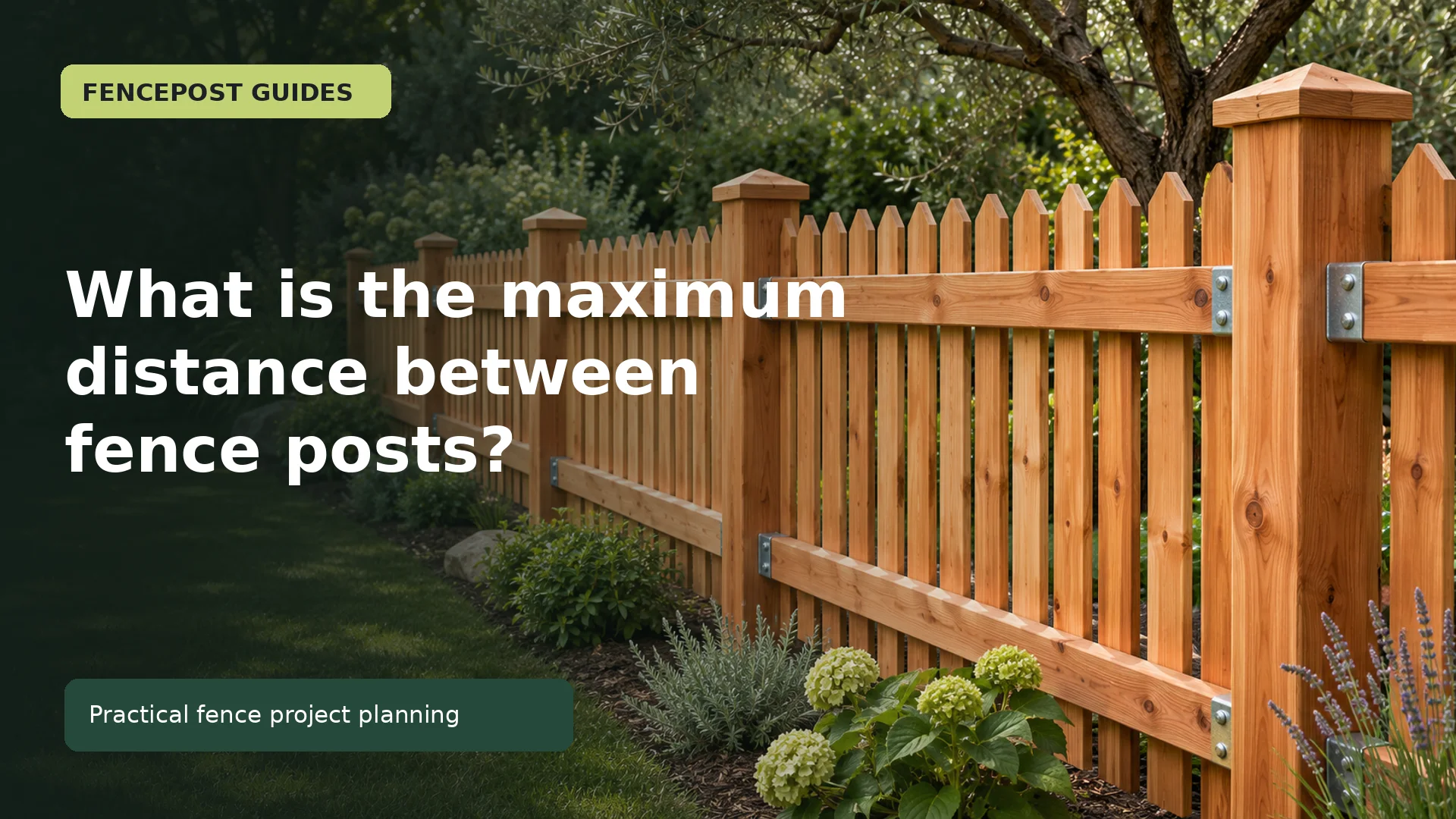
The maximum distance between fence posts is the limit for your particular fence system, not one number for every material. For a conventional wood fence, 6–8 feet on centre is a typical planning range. Your manufacturer’s instructions can require something different.
Maximum distance between fence posts: typical versus allowed
Use the allowed span from the fence’s installation details. Lowe’s wood-fence guide describes typical spacing of 6–8 feet on centre, meaning from the centre of one post to the next. That range doesn’t establish an 8-foot maximum for all fences, gates or sites.
If you use a prefabricated panel, you need the correct opening between posts. Cutting every bay to an assumed round number can leave rails too short or remove the overlap required at a connection.
How far apart should 4×4 fence posts be?
For your timber fence using nominal 4×4 posts, use the system’s span limit alongside the post dimensions. Height, rail size, board arrangement, fixings and exposure all affect the assembly.
With measured 3.5-inch posts, a 6-foot centre-to-centre spacing leaves 68.5 inches between the inside faces; an 8-foot spacing leaves 92.5 inches. Rails mounted across the faces need a different cut length from rails fitted between posts. This is why your post-and-rail calculation needs a stated connection basis.
Why do product-specific limits matter?
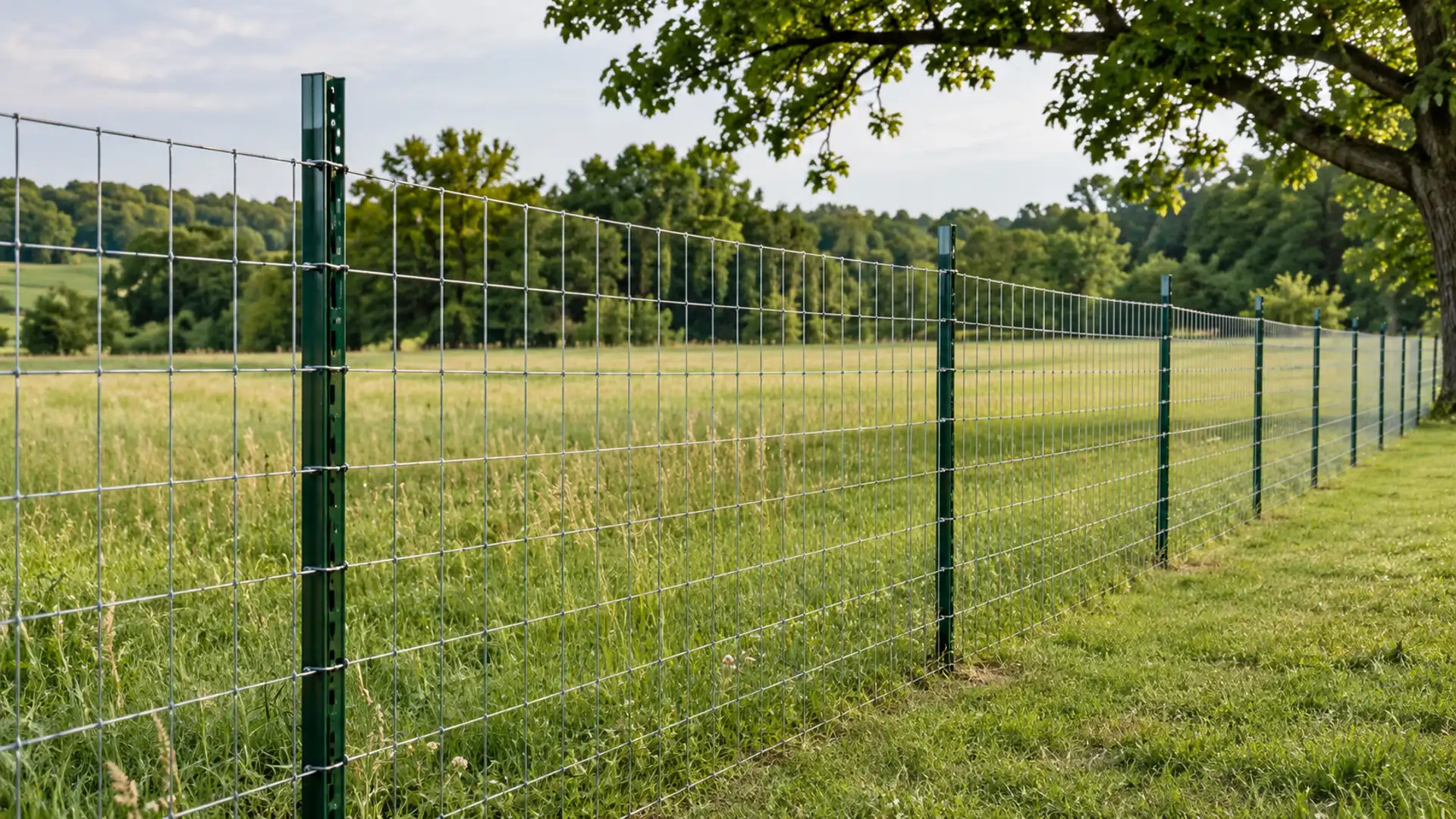
Published product examples show how far the numbers can differ. Master Halco’s PostMaster chart lists an 8-foot maximum post spacing for its 6-foot fences, but 4 feet for its 8-foot fences to maintain the stated warranty. That chart applies to the named steel system, with its conditions, rather than ordinary timber posts.
Lowe’s vinyl installation example uses 73.25-inch centres for particular 6-foot panels and 5-inch posts. It’s a useful reminder to measure the purchased kit and read its instructions before marking holes. Neither example supplies a universal limit for agricultural wire or chain link.

How many posts does a straight run need?
For one uninterrupted straight run, sections = ceiling(run length ÷ maximum spacing), and posts = sections + 1. Divide the run by the section count to find an equal centre spacing. This simple example assumes compatible end measurements, no gate and no shared corner.
For 100 feet with an 8-foot limit, you need 13 sections and 14 posts at approximately 7.69-foot centres. With a 6-foot limit, you need 17 sections and 18 posts at about 5.88-foot centres. Your second option adds four post positions, so foundations and material costs change too. Decide on the supported spacing before comparing budgets and placing a stock order.
Frequently Asked Questions
Can I put posts 10 feet apart?
Only if the particular system and installation design support that span. The usual wood-fence range doesn’t establish approval.
Do gates count as ordinary fence sections?
Gate openings and supporting posts need their own layout and hardware dimensions.
Should I measure along a slope?
Use the horizontal or racked measurement required by the chosen system, not an interchangeable tape distance.
Sources & References
Research checked 10 November 2026. Primary links appear beside the facts they support above; each destination is linked once.
The tables and worked examples are independently calculated arithmetic, not reported field measurements. Published installation guidance has a stated application; local requirements and the actual product instructions take precedence.
Sizing and quantity examples illustrate their stated assumptions. They do not establish site-specific wind resistance, soil capacity or construction approval.