Chain Link Fence Calculator
Counts measured post layouts and selected fabric, rail and wire quantities. Choose the specification scope below; generic mode does not assess universal brace or rail requirements. Full fittings and privacy slats are not counted.
The diagram appears here after a calculation.
The chain link fence calculator separates line posts, terminal supports, mesh and top rail quantities. Enter the run length and fence height, then adjust spacing and roll or stock lengths to match the system you will buy. Add the actual gates and corners so the material count follows your layout.
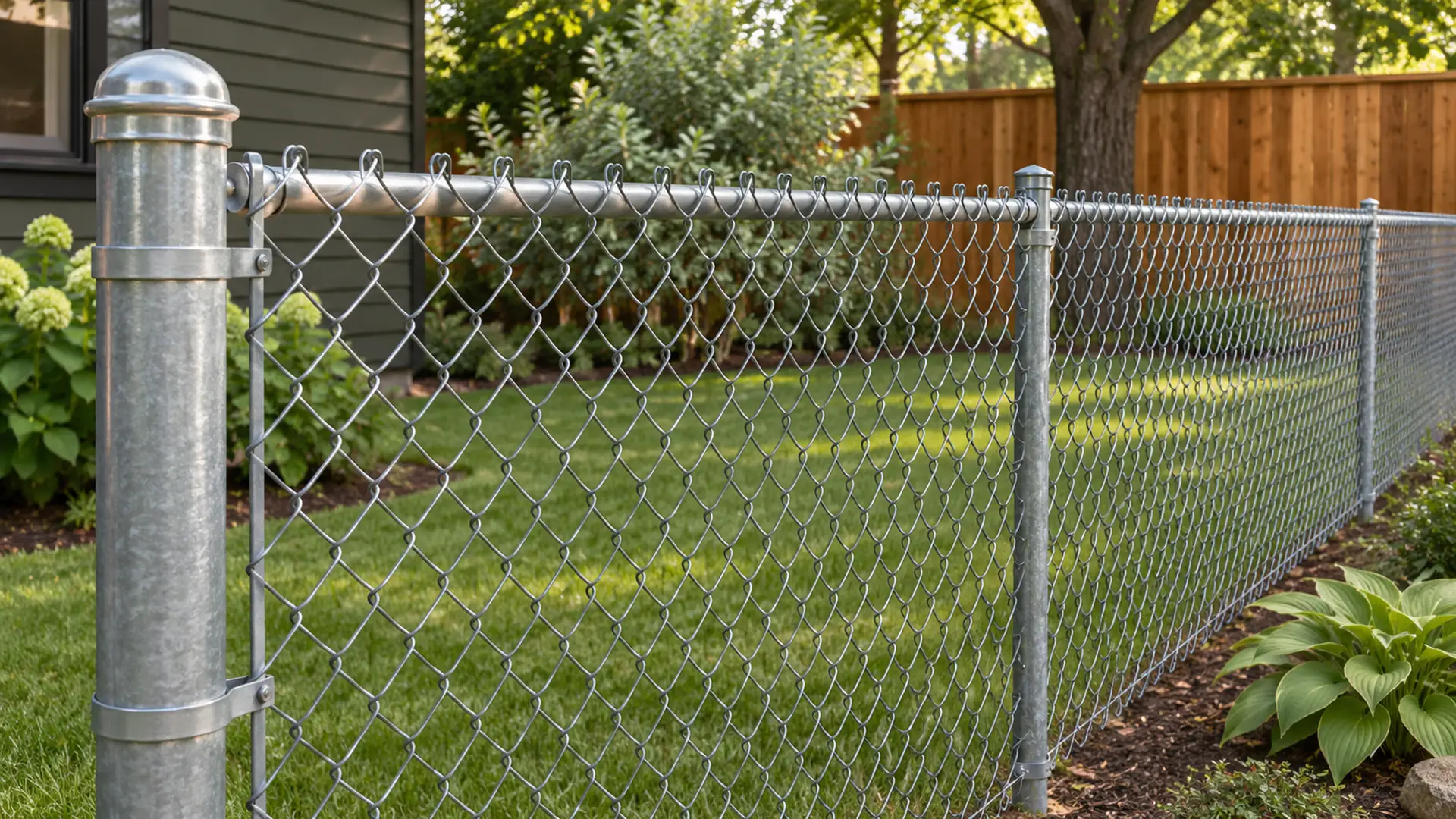
How the chain link fence calculator works
The tool counts sections along each run, identifies terminal positions and estimates internal line supports. Mesh covers the run between the relevant terminals. Top rail follows its own stock and connection assumptions.
Measure length, height and terminal positions
Your measured run needs to show ends, corners and gate openings separately because they determine terminal assemblies. Fence height affects mesh area and some profile-specific fittings, while a commercial specification can include components that a residential assembly doesn’t use. The selected profile should therefore match your intended application.
Its accessories aren’t automatically requirements for every chain link fence.
Posts, mesh and top rail formulas
For one simple open run, sections = ceiling(run length ÷ maximum spacing). Internal line positions = sections − 1, with two end terminals. Mesh area = covered length × fence height.
Roll purchases depend on usable roll length, end allowances and rounding. Top rail sticks depend on the selected stock length and engagement details, so a footage total is not automatically a cutting schedule.
Worked example: 100 feet of 6-foot mesh
A generic straight 100-foot run at a 10-foot maximum spacing gives 10 sections, 9 internal line posts and 2 end terminals before extra assemblies. Six-foot mesh covers 600 square feet. With zero allowance, two usable 50-foot rolls cover the run.
Adding an allowance can require another roll, depending on the selected purchasing rules. Gates, corners and terminal fittings must still match the actual plan.

Keep fittings and profile assumptions visible
Your terminal fittings, tension bars, ties and caps serve different parts of the fence, so the quantities need to follow the chosen assembly. Slats or screens can also change wind loading without changing the mesh dimensions. The calculator doesn’t verify that a screened fence can use the same posts or foundations as open mesh.
That needs checking against the actual fence system. Full fitting and gate-hardware counts need a separate list.
Review the plan with your supplier
You can compare the list with your supplier’s mesh gauge, coating, post sizes and rail connections. Industry guidance and published specifications describe particular applications; they aren’t interchangeable approvals. Before digging, your boundary and underground-service checks also need to be complete.
A final comparison with pack sizes and gate hardware helps keep omitted special items out of what looks like a complete order.
Frequently Asked Questions
Does mesh area tell me how many rolls to buy?
Not by itself. Roll length, fence height and usable coverage determine purchases, with any selected allowance applied.
Do corners use line posts?
Corners are terminal positions and may need different posts, fittings and braces.
Can I add privacy slats?
Privacy slats need a wind-capacity check of the fence system and foundations.
Sources & References
Method notes · Checked 10 November 2026
Published references
- Chain Link Fence Manufacturers Institute: Technical information. Industry technical guidance for chain-link applications. Quantity arithmetic does not verify wind resistance or structural member sizes.
- Iowa SUDAS: Section 9060, Chain Link Fence. 2024 edition, residential and commercial profiles. Profile-specific accessory rules are not requirements for every chain-link fence worldwide.
- NIST: International foot and metric conversion. The international foot is exactly 0.3048 metres. Calculations use consistent units before area and volume conversion.
Our calculation and planning assumptions
End, corner, gate and pull assemblies are separate from line supports. Generic mode does not assess required braces, pull intervals, intermediate rails or bottom wire. The Iowa SUDAS commercial profile uses intermediate rail at 8 ft and above, bottom tension wire at 5 ft and above, and a 300 ft maximum between terminal/pull positions; verify contract drawings.
The residential figure excludes braces, truss assemblies and tension wire from its standard detail. Full fittings, gate hardware and structural design are not assessed.
Results are preliminary planning estimates. Confirm the actual fence system, local requirements and installation conditions before construction.