T-Post Fence Calculator
The diagram appears here after a calculation.
The T-post fence calculator estimates line posts, terminal positions and wire quantities for a farm fence layout. Enter the run and spacing, then choose the wire or mesh arrangement you intend to install. Add gates, corners and brace details where they apply instead of counting every support as an ordinary T-post.
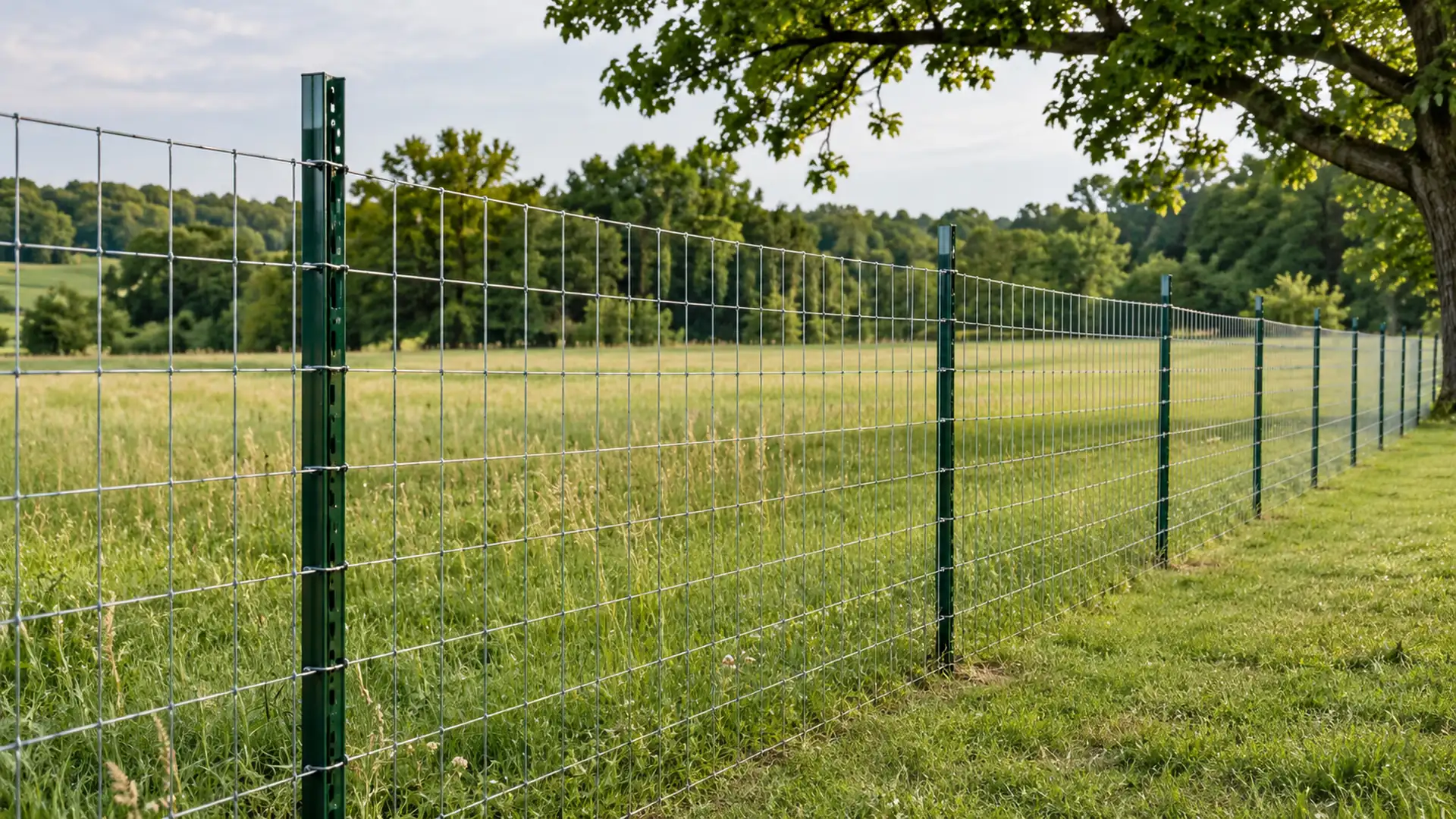
How the T-post fence calculator counts supports
Line posts support the fence between terminal assemblies. End, corner and gate posts take different roles and may need bracing. The calculator separates these quantities so a basic line-post count doesn’t hide the heavier assemblies at changes in direction.
Choose T-post spacing for the actual fence
Your wire, animals and terrain determine which T-post spacing is suitable. The national NRCS fence standard directs users toward local Field Office Technical Guide requirements, rather than supplying one installation specification for every farm. If you’re using that framework, the applicable local design and wire manufacturer’s instructions determine spacing, tension and bracing.
A line-post count alone doesn’t settle those choices.
Wire and post-count formulas
Sections = ceiling(run length ÷ maximum spacing). A simple unbraced open run has sections − 1 internal line positions and two end positions. Stranded wire length = run length × number of strands, before any selected allowance.
Mesh uses run coverage and roll length instead. Brace assemblies can occupy or replace positions, so apply their layout rules before adding everything together.
Worked example: a 100-foot straight run
For 100 feet with a 10-foot maximum spacing, allow 10 sections. Before adding brace assemblies, that means 9 internal line posts and 2 end posts. Three horizontal strands require 300 feet of wire before terminations, joins or waste.
This is a quantity illustration, not a complete bracing specification. Choosing actual end braces changes the support schedule shown by the calculator.

Order wire rolls and fittings carefully
Your wire purchases depend on usable roll length and the allowances needed for connections. Mesh already forms a sheet, so you shouldn’t multiply its length by the number of strands used for individual wires. Clips, strainers, insulators and gate fittings belong to the actual assembly, while pack sizes can increase what you buy beyond the bare line length.
That difference is normal purchasing rounding.
Check terrain, gates and special loads
A changing ground profile can require extra support or a different arrangement. You’ll also need suitable terminal posts and hardware for gates, rather than ordinary T-posts at each side. The quantity model doesn’t calculate wire tension, brace strength, electrical performance or foundation capacity.
Your marked layout and local agricultural specification provide the next check before the material list becomes an installation plan.
Frequently Asked Questions
Are end posts included in the T-post count?
They are listed separately because terminal posts and line posts have different jobs.
Can I use this for electric fencing?
Use it for supported quantity inputs only. Energizer selection, earthing and electrical safety require the chosen system instructions.
Why does a brace change post quantities?
Braces can replace line positions; adding them without a layout adjustment can double-count supports.
Sources & References
Method notes · Checked 10 November 2026
Published references
- USDA NRCS: Fence conservation practice standard 382. The national standard directs users to local Field Office Technical Guide documents for actual planning, design and installation.
- NIST: International foot and metric conversion. The international foot is exactly 0.3048 metres. Calculations use consistent units before area and volume conversion.
- 811: Before You Dig. US utility-location guidance. Elsewhere, use the appropriate local service and rules.
Our calculation and planning assumptions
Spacing, strands, braces and roll allowances must match the actual farm fence. A national standard is not a substitute for a local agricultural design.
Results are preliminary planning estimates. Confirm the actual fence system, local requirements and installation conditions before construction.